
Groupon – Deals & Coupons
Groupon, Inc.Shopping
4.5333.95K Reviews
- Version
- 26.17.0
- Installs
- 100.00M
- Age Rating
- Mature 17+
Screenshots
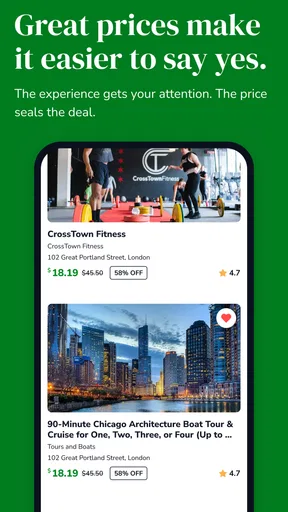
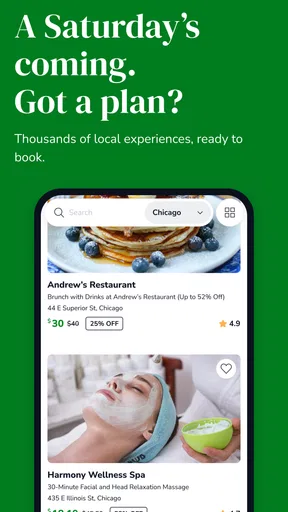
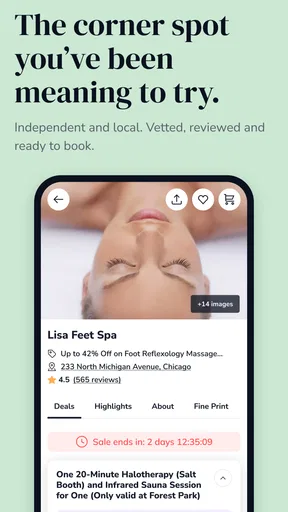
Our Review of Groupon – Deals & Coupons
 Analysis by Appyee
I use deal apps when I already know what I want, not when I want another stream of random offers to browse. Groupon – Deals & Coupons makes sense in that situation because it brings local activities, services, travel offers, and products into one shopping app. My experience with it is that it can be genuinely useful when I treat each voucher as a purchase that needs checking, rather than assuming every discount is automatically a bargain.
That distinction matters. The app is free, belongs to the Shopping category, and is developed by Groupon, Inc. It has built a very large user base, with over 100 million installs and an average rating of 4.4 from around 1.7 million ratings. Those figures suggest that the service is familiar and useful to many people, but they do not remove the need to read the conditions attached to an individual deal. Groupon is a marketplace, so the quality of the experience can vary by merchant, location, timing, and redemption process.
How I judge trust before buying a deal
The first thing I look for is clarity. A good offer should tell me what I am buying, where it can be used, when it expires, and whether I need to reserve a time. I do not rely on the headline percentage alone. A coupon that appears dramatically reduced may still be poor value if the available appointment times are inconvenient, the voucher covers only part of the service, or extra conditions apply at checkout.
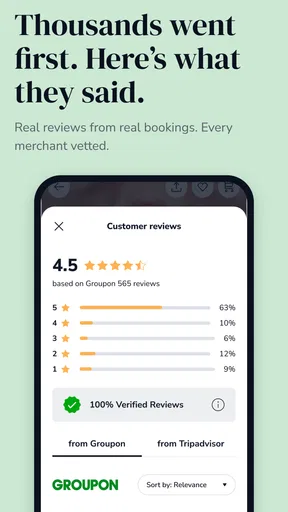
Groupon’s strongest trust signal is not simply its size. It is the amount of information presented around a listing and the fact that the purchase is handled inside a recognizable platform rather than through an unfamiliar standalone page. That gives me a starting point for evaluating the merchant, but I still treat the merchant’s terms as essential reading. The app can organize the transaction; it cannot make every local business equally reliable.
I also pay attention to the difference between a product deal and an experience deal. A physical item usually involves delivery expectations, stock, and return questions. A massage, restaurant visit, class, or attraction involves redemption rules and scheduling. The same discount language can hide very different practical commitments. I would never buy an experience for someone else without checking whether the recipient can use it in the intended area and during a suitable period.
The app’s age classification is Mature 17+, which is a useful reminder that the catalog and shopping environment are not designed as a children’s marketplace. Parents should not hand over purchasing access casually, especially where saved account details or payment choices are involved. I see this as part of responsible use: the person making the purchase should understand the offer, the merchant, and the conditions before confirming it.
What I check on the offer page
Before paying, I read beyond the main title and image. I look for the exact service or item included, the number of people covered, the redemption window, blackout dates, location restrictions, and any booking instructions. If the offer is for a business I have never used, I search the merchant separately and compare the normal price with other local options. That extra step often tells me whether the deal is convenient or merely well presented.
I am especially careful with “from” pricing and packages that show several variants. The cheapest option may not match the photo or the description that attracted me. I select the precise version I want and review the final total before completing the order. A coupon’s value is only real if the version I can actually use fits my needs.
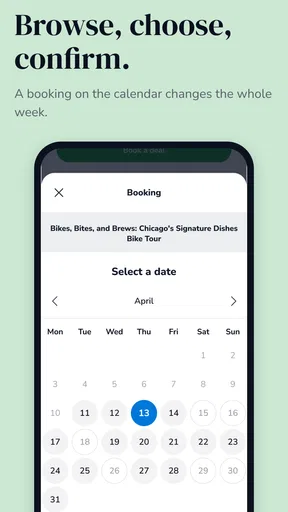
For local services, I save the confirmation and redemption details somewhere I can reach without searching through old email. I also check whether the merchant requires the voucher code at arrival or asks me to reserve first. Showing up without following that process is an avoidable way to turn a good purchase into an awkward conversation.
Account controls and visible choices
Groupon is more useful when I use an account, because purchases and vouchers need to be associated with a person. That convenience also means I treat account access as important. I review the account area, keep my sign-in details private, and avoid making purchases from a shared device where another person could accidentally use a stored session or open order information.
I prefer to make deliberate choices about notifications rather than accepting every alert. Deal reminders can be helpful when I have saved something for a specific trip or event, but frequent promotional messages can make the app feel more urgent than the purchase really is. My practical rule is simple: I keep messages that help me redeem something I bought and turn down anything that encourages browsing without a plan.
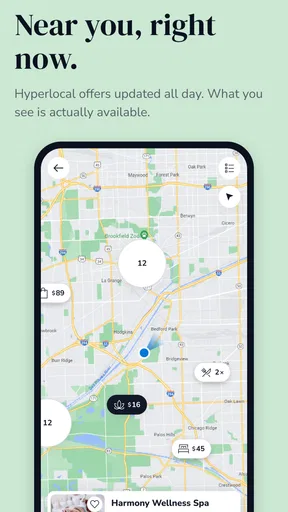
The same principle applies to location access. Local discovery is more convenient when the app can show nearby offers, but I do not consider continuous access essential for every shopping session. If I am searching for a deal in a city I plan to visit, I can browse by destination instead of allowing the app to guide every search from my current position. That gives me more control over when location is relevant.
I also avoid granting access that is unrelated to the task I am doing. If I only want to browse or manage a voucher, I do not see a reason to make broader device information available by default. Permission prompts should be read rather than dismissed automatically, and I revisit them through the phone’s settings when my use of the app changes.
Data-sensitive moments in everyday use
The most sensitive moments are not necessarily the first launch or the offer search. They are checkout, account recovery, location-based browsing, and voucher redemption. At checkout, I slow down and verify the merchant, selected option, total, and payment choice. A discount can make a purchase feel low-risk, but the transaction still concerns money and may create an account record connected to the order.
When I buy a deal for another person, I think about what information is included in the booking or delivery process. I share only what the merchant needs to provide the service. For a restaurant or activity, that may mean a name and reservation detail; for delivery, it may involve an address. I do not add personal notes or extra contact information merely because a form makes room for it.
Redemption can also expose information in a public setting. I keep the voucher code private until I am dealing with the intended merchant, and I avoid posting screenshots that show order numbers, barcodes, or identifying details. This is a small habit, but it matters when a digital voucher can be used by whoever obtains the relevant code.
For travel-related offers, I read especially carefully. A travel deal may involve dates, occupancy, cancellation conditions, and separate booking steps. I would not assume that buying the Groupon voucher completes every part of the reservation. I confirm what the voucher covers and what must be arranged with the provider before committing to flights, accommodation, or a fixed itinerary.
Product purchases deserve a different check. I consider shipping time, seller information, item variations, and the return process. A low price is not helpful if I need the item tomorrow or if returning it would be inconvenient. In that situation, a nearby retailer with a clear return counter can be a better choice even when its sticker price is higher.
A realistic way I use it
Imagine I am planning a weekend with a friend and want an activity rather than another meal. I search the destination, filter through the available experiences, and first compare the offer with the attraction’s ordinary booking route. Then I check the usable dates, whether two people are included, how far the location is from our accommodation, and whether advance reservation is required.
If everything fits, I buy only after checking the final selection and saving the redemption instructions. I contact the merchant before the weekend if the terms ask for a reservation. On the day, I open the voucher before arriving instead of relying on weak mobile reception at the entrance. This workflow takes a few minutes, but it removes the most common sources of disappointment: wrong dates, wrong package, and unclear redemption steps.
For recurring needs, I use the app more cautiously. A discounted cleaning service, beauty appointment, or fitness-related offer may look attractive, but I ask whether the provider is close enough and whether I would willingly return at the normal rate. If the answer is no, the deal may be useful once, but it is not necessarily good value for an ongoing routine.
Where the app is better than usual alternatives
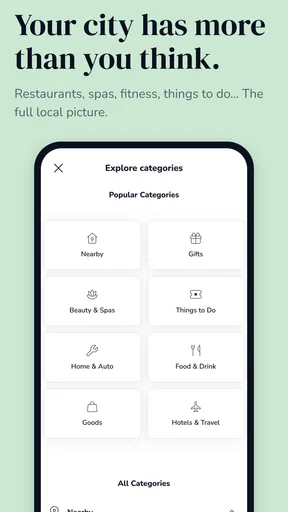
Compared with searching individual business websites, Groupon is convenient for discovering several types of offers in one place. I can start with a category or destination instead of knowing the exact merchant already. That is particularly helpful for activities, local services, and gift ideas, where I may know the budget but not the provider.
Compared with ordinary coupon websites, the advantage is that the offer is connected to a purchasing and voucher workflow rather than being only a code copied from a list. That can reduce the effort of figuring out whether a code is current or where it applies. Still, I do not assume that every listed deal beats a direct booking. Some businesses offer their own flexible cancellation terms, loyalty benefits, or clearer customer support outside a marketplace.
Compared with price-comparison shopping, Groupon is less suitable when I already know the exact product and want the lowest total cost from a specific retailer. A conventional retailer may provide better information about delivery, stock, warranties, and returns. Groupon is at its best when discovery and a packaged local experience are more important than a detailed product comparison.
Limitations I noticed in the decision process
The main friction is not finding an offer; it is deciding whether the offer is genuinely practical. A crowded catalog can encourage impulse purchases, and the visual emphasis on savings can make terms feel secondary. I have to create my own pause between seeing a deal and buying it. If I cannot explain exactly when, where, and how I will use it, I leave it alone.
Merchant variation is another limitation. One business may make redemption simple, while another may require more planning or communicate less clearly. The app can show the deal, but my confidence still depends on the listing details and the merchant’s behavior. For an important celebration or time-sensitive booking, I prefer a provider with a direct reservation process and clearly stated support options.
Expiry rules can also change the value calculation. A voucher that sits unused is not a saving. I keep track of the usable period immediately after buying and do not collect deals merely because they are cheap. This is one reason I would skip the app if I tend to purchase aspirational offers and forget them.
The app is also not the right choice for anyone who dislikes marketplace uncertainty. If you want one accountable retailer, a straightforward return route, and no need to compare merchant conditions, buying directly may feel calmer. Groupon adds discovery and variety, but that variety asks the user to do more checking.
Version, cost, and practical fit
The app is free to download and use, and the current version is 26.12.0. It supports devices running Android 8.0 or later. I would still keep the application updated through the normal platform process, particularly when I plan to rely on a voucher at a venue. A current app is more useful than an old installation when I need to open order details quickly.
Free access does not mean every purchase is free, of course. The app is a storefront for paid offers, so I separate the cost of using the application from the cost of the deal itself. Before confirming, I inspect the complete order total and the selected quantity. That habit is more reliable than judging value from the initial discount displayed in search results.
The long operating history also helps explain why the service feels broader than a simple coupon folder. It was released on July 15, 2010, and its scale is reflected in the large number of ratings and installs. I see that history as context, not as a guarantee: an established platform can still contain an unsuitable deal, and a high average rating cannot answer whether one particular merchant fits my plans.
My cautious verdict
I recommend Groupon – Deals & Coupons to people who enjoy discovering local activities, services, and occasional products, and who are willing to read the conditions before paying. Its real strength is organized deal discovery; its real weakness is that the user must supply the final layer of judgment. I find it most valuable for flexible plans, gifts that can be scheduled, and experiences where comparing several nearby options saves time.
I would skip it for urgent purchases, exact product research, or bookings where cancellation and support need to be completely direct. I would also avoid buying simply because a percentage looks impressive. Search by destination or need, compare the offer with the direct alternative, check the redemption rules, and keep personal information limited to what the transaction requires.
After using it with those boundaries, I see the app as a useful shopping tool rather than a shortcut around normal buying decisions. The free access, broad catalog, and mature marketplace make it worth trying, while the Mature 17+ classification and account-based purchasing are good reasons to use it deliberately. If you approach each voucher as a small contract with a merchant—not just as a tempting discount—you are much more likely to get the convenience the service promises.
Privacy and Permissions
See what permissions an app requests and how it handles your data.
- Calendar
- read calendar events plus confidential information, add or modify calendar events and send email to guests without owners' knowledge
- Contacts
- read your contacts
- Location
- approximate location (network-based), precise location (GPS and network-based)
- Phone
- read phone status and identity
- Photos/Media/Files
- read the contents of your USB storage, modify or delete the contents of your USB storage
- Storage
- read the contents of your USB storage, modify or delete the contents of your USB storage
- Camera
- take pictures and videos
- Microphone
- record audio
- Wi-Fi connection information
- view Wi-Fi connections
- Device ID & call information
- read phone status and identity
- Other
- view network connections, create accounts and set passwords, full network access, run at startup, draw over other apps, control vibration, prevent device from sleeping, read Google service configuration
Verdict
Strengths of Groupon – Deals & Coupons
- Wide range of local deals, travel offers, products, and experiences
- Easy-to-use search filters help narrow deals by location and category
- Mobile coupons can be redeemed directly from the app
- Personalized recommendations make discovering nearby offers convenient
- Frequent notifications highlight limited-time discounts and price drops
Limitations of Groupon – Deals & Coupons
- Some deals have strict expiration dates or blackout periods
- Redemption rules can vary significantly between participating merchants
- Customer support response times may be inconsistent for deal issues
- Refunds and cancellations can depend on the individual merchant
- Some offers may have extra fees, exclusions, or minimum purchase requirements
Similar Picks in This Category
View All
SHEIN-Shopping Online
Roadget Business PTE. LTD.4.8

Amazon Shopping
Amazon Mobile LLC4.4


Mercado Libre: Compras online
Mercado Libre4.8

Wish: Shop and Save
Wish US Holdings LLC4.7

Alibaba.com - B2B marketplace
Alibaba Mobile4.4
Frequently Asked Questions
What is Groupon – Deals & Coupons, and how does it work?
Groupon is a shopping and local-deals app that lets you discover discounts on restaurants, activities, beauty services, travel, products, and more. After selecting an offer, you usually purchase it through the app and receive a digital voucher. The voucher includes redemption instructions, expiration details, restrictions, and any booking requirements, so it is important to read the complete deal information before paying.
Are Groupon deals available everywhere, or do they depend on my location?
Most Groupon offers are based on your selected city or current location, so the available deals can vary considerably from one area to another. You may find different restaurants, entertainment venues, services, and local promotions depending on where you live or travel. Some product and travel offers are available more broadly, but availability, pricing, and terms can still differ by region.
How do I redeem a Groupon voucher after purchasing it?
After completing a purchase, your voucher is generally stored in the app under your purchases or available deals section. Open it and follow the merchant’s instructions, which may require showing a barcode, entering a redemption code, printing the voucher, or making an appointment in advance. Always check blackout dates, reservation rules, expiration dates, and whether the voucher can be used more than once.
Can I get a refund or cancel a Groupon purchase?
Refund and cancellation options depend on the type of Groupon deal, the merchant’s conditions, and how close the purchase is to its expiration or scheduled appointment. Some vouchers may qualify for cancellation within a stated period, while personalized, travel, event, or already-redeemed purchases can have stricter rules. Review the specific refund policy shown before purchasing and contact Groupon support if the option is unclear.
Is Groupon safe to use, and what should I check before buying a deal?
Groupon is a widely used marketplace, but each offer is provided under specific merchant terms, so careful reading is essential. Check the final price, taxes, fees, expiration date, booking requirements, location, exclusions, and customer reviews before purchasing. Also confirm that the merchant accepts the voucher and understand whether the deal is for a fixed service, a product shipment, or a promotional discount.
